

A Literal Silver Lining
an explainer on recent surge of silver prices

Lately, gold and silver prices have been skyrocketing, and like most people, I assumed I knew why.
Trump’s policy changes. The AI bubble might o might not crack. Michael Burry in Unchained Cassandra mode. Market sentiment turning cautious. Warren Buffett liquidating positions and parking money in gold, playing it safe like he does when things feel uncertain. And as US markets rippled outward, gold prices in India hit the roof. Every household was talking about it.
So when silver started climbing too, I figured it was the same story. Safer assets during turbulent times. I didn’t dig any further.
Until I did.
Buried in the financial headlines was a detail most people miss: a significant chunk of silver’s surge isn’t about investors fleeing to safety. It’s about industrial demand. Not for jewelry or coins, but for something far different → solar panels.
At first, I was like, Why?
Here’s why
In the history of transitioning from one source of energy to another, we uncover a different set of problems, which don’t show up until the transition has scaled.
Coal replaced wood → saved forests, but filled cities with smoke.
Oil replaced coal → transport affordable, but it locked us into fossil fuel dependence.
Each transition felt like progress. Each came with trade-offs that only became obvious later.
Solar energy sits in the same lineage [At first, even I was surprised]. Well, I mean, of course, we are just getting into it, and we’re still upscaling the infrastructure, and as we do so, that trade-off we talked about is coming into picture.
The Clean Energy That Isn’t Quite Clean
For years, solar has been sold as the cleanest solution to our climate problem. No smoke, no fuel, no moving parts. Just sunlight turning into electricity.
And that story isn’t wrong. Once installed, a solar panel generates power with almost zero emissions. Costs have fallen sharply. Installations are scaling rapidly. Governments embrace it because it seems to solve two problems at once
Climate targets
Energy independence.
At start, it looked simple: store converted solar energies into batteries and done.
See, Sun rises in the morning, and around noon, we get maxium electricity generation, but we need electricity the most at night, running our TVs, ACs when everyone returns home. This was the fundamental mismatch: the electricity shows up when it’s least needed and disappears when demand is highest.
Next question that pops up in mind, which I had was, why not just keep it stored to be used later then. Easy right? In fact, we are doing it, but again,
These batteries are Expensive to set up, and they have a certain capacity to hold, 2-4 hours of power and that’s it, they’re drained.
And the more cycles of charge-discharge they go through, they degrade this capacity, so they need to be replaced (ofc).
It gave me the idea of why solar is still incompatible to fulfill our demands.
If you remember, we were debugging a sudden surge in Silver prices, so here’s the kicker
Solar power doesn’t burn fuel, but it consumes an enormous amount of physical resources.
Silicon → cells.
Aluminum → frames.
Copper → wiring and inverters.
Silver → electrical contacts.
Glass from high-purity sand.
So, when you look at it, the prerequisites for consuming solar energy itself require a ton of resources. Also, most are metals, which need mining.
Even after mining, they require processing; they can’t be found in the same place, so transportation needs to be taken into account.
Panels do repay this carbon debt over time, but that repayment is gradual, not instant.
The Silver Lining (Literally)
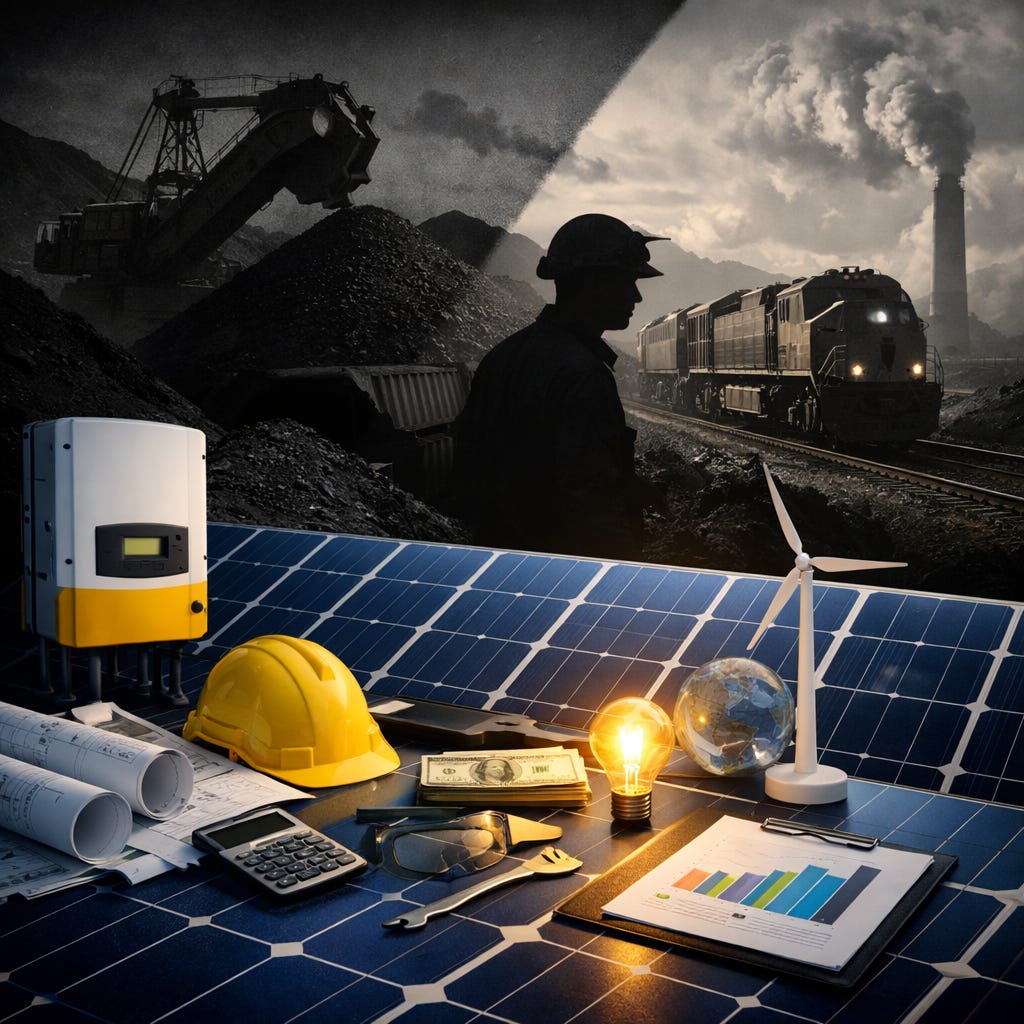
This is where silver comes in.
Photovoltaic cell manufacturing alone accounted for about 14% of global silver consumption in 2023. Copper demand is even more widespread; it was needed not just for panels but for inverters, and a lot of other things.
When demand grows faster than supply, prices rise. Thus the surge.
Here’s something that is usually missed out, mining of things happens in remote areas, but the consumption happens in cities, far away from it. Not to mention the environmental damage it does comes with. Causing that imbalance.
So the next time you look at a Solar System, or just a simple solar panel, remember that it’s a chain that starts from mining so even though the end product of solar energy is a clean source, the extraction and a few other steps are not.
None of it defines that solar is a bad idea, it does lower the consumption of traditional fossil fuels, but it’s not a complete replacement, until we have some other solution to all this process, which I don’t see is anywhere near.
But until then, we have it for offloading.
The world needs solar. But it also needs honesty about what solar can and cannot do on its own. And it needs the infrastructure, storage, and backup systems to make renewable energy actually work at the scale we need.
Otherwise, we’re just repeating history, solving one problem while planting the seeds of the next.
That’s a wrap for today. I hope you enjoyed reading the article, understood it, and before I say goodbye for today, here’s a quote I’ve been pondering,
"Don't explain your philosophy. Embody it."
If you’ve made it this far, please don’t forget to share it with your friends, family, and strangers.
Have a Great Day 💖